



Sources and Structural Characteristics of Humic Acid
Humic acid can be divided into two categories: natural humic acid and artificial humic acid. Humic acid formed from organic matter under natural conditions through the decomposition and transformation by microorganisms is collectively called natural humic acid. Natural humic acid mainly includes soil humic acid, aquatic humic acid, and mineral humic acid. Humic acid in soil and aquatic bodies is mainly formed from the biochemical decomposition of organic matter by aerobic microorganisms, while mineral humic acid is mainly formed by anaerobic microorganisms over thousands to tens of thousands of years. With the development of technology, the production of artificial humic acid is increasing. The raw materials for artificial humic acid are very diverse, including crop straw and various organic wastes from industrial production, which are produced through controllable microbial fermentation and physicochemical processes.
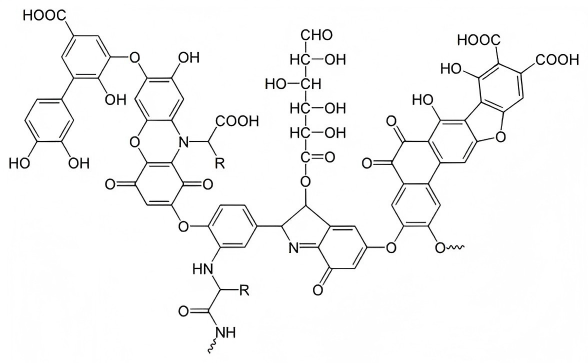
Humic acid can be divided into two categories: natural humic acid and artificial humic acid. Humic acid formed from organic matter under natural conditions through the decomposition and transformation by microorganisms is collectively called natural humic acid. Natural humic acid mainly includes soil humic acid, aquatic humic acid, and mineral humic acid. Soil and aquatic humic acid are primarily formed from the biochemical decomposition of organic matter by aerobic microorganisms, while mineral humic acid is mainly formed by anaerobic microorganisms over thousands to tens of thousands of years. With technological advancements, the production of artificial humic acid is increasing significantly. The raw materials for artificial humic acid are widely available, including crop straw and various organic wastes from industrial production, which are produced through controlled microbial fermentation and physicochemical processes.